
Essay 2 min read
People Believe What They Want to Believe
Plato's Allegory of the Cave, and the choice we face when the truth confronts us: cling to what we know, or step outside.

Everyone holds their own view. Even when a general truth is revealed, some still choose to believe the other side.
Sometimes I wonder: is it their ego that keeps them firm in their stance, or my ego that pushes me to prove I'm right?
Plato's Allegory of the Cave is a simple story about objective reality.
The cave
A group of people has been imprisoned in a dark cave since birth. Behind them, people walk along a path carrying objects, and a fire casts the shadows of those objects onto the wall in front of the prisoners.
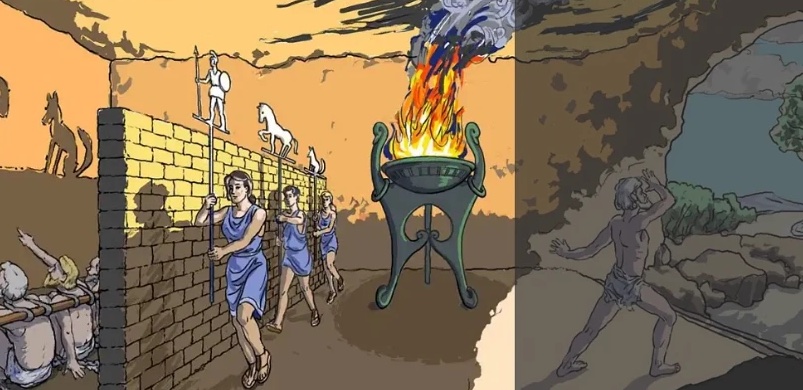
For the prisoners, these shadows are reality.
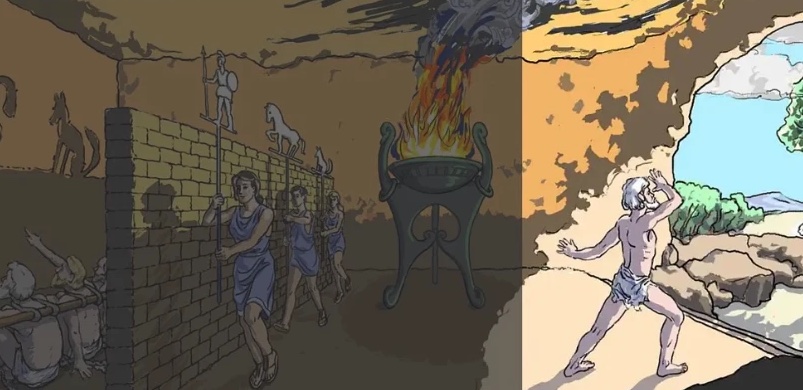
Stepping outside
One day, a prisoner escapes and ventures outside the cave. He realizes the shadows on the wall were mere illusions.
Coming back
The escaped prisoner comes back, shares what he saw, and offers to help the others escape. But they refuse to believe him.
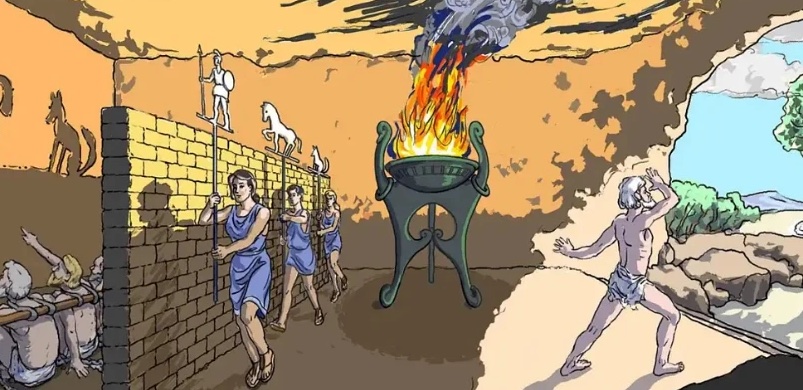
The shadows remain the only reality they know.
What I take from it
Our perception of reality is not necessarily the same as objective reality.
Even when the truth is revealed, people often cling to the version they want to believe.
There is no absolute right or wrong; it shifts with context, time and place.
To be a true human is to seek objective reality, respect others' beliefs, and rise above the shadows toward wisdom.
In the end, reality is lived, not absolute, shaped by how each of us chooses to see.
So we face a choice: remain prisoners of our own beliefs, or step outside like the escaped prisoner, exposed to the truth. When the truth confronts us, we can cling to what we already know, or open ourselves to see which view is truly worth believing.
First shared as an Instagram post on @kuronekoarchive, September 29, 2025.